

5-D Learning: Building Holistic Ecosystems for Children with a Parent in Prison
—across NGOs, prisons, schools, media and society
12 June 2026, Palazzo Marino (Milan, Italy)
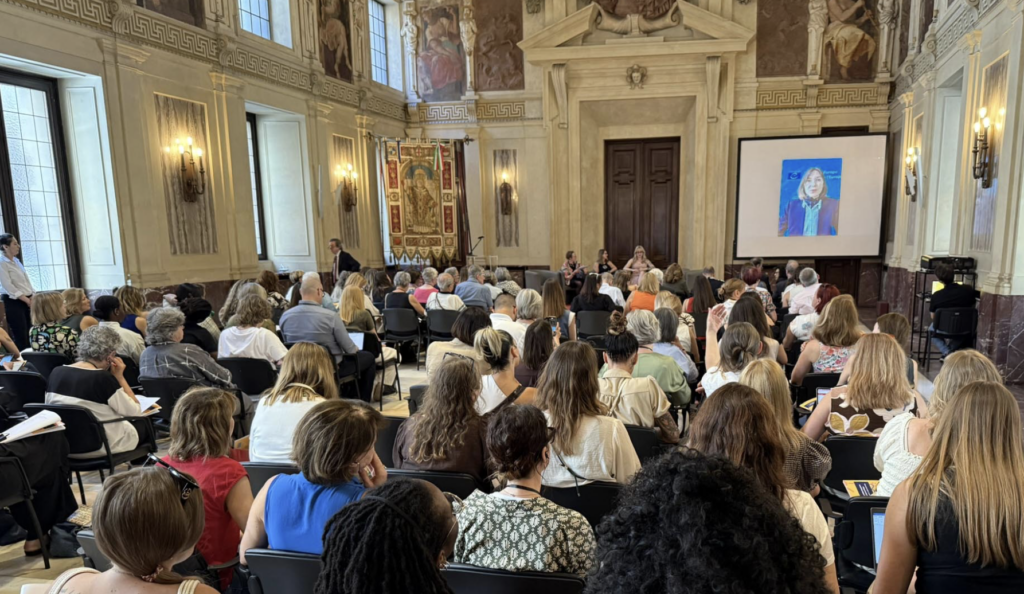
We know that cross-sectoral collaboration is needed so that children are considered from the moment of a parent’s arrest through to their sentencing, imprisonment and reintegration. Yet achieving interconnected coordinated action requires more than policies, services and solutions. For long-term change, we need ongoing, mutually reinforcing learning to establish shared values and a shared long-term societal vision for children at risk of or affected by parental imprisonment.
Herein lies the focus of COPE’s 18th International Conference held at Palazzo Marino in Milan, hosted by Bambinisenzasbarre and chaired by COPE President Kate Philbrick OBE. Institutional representatives in justice sectors, international experts, practitioners, researchers and civil society organisations discussed stigma, barriers to contact, impact of parental imprisonment on children and what can be done to better support them. It offered a space for exchange between Italian, other European and international actors, with a series of panel discussions and individual contributions focusing on building coordinated approaches that protect the rights of children with a parent in prison and support family relationships.
I. Institutional Panel —
Building cooperation between institutions to protect children’s rights
“If we pay attention to children’s rights and wellbeing and work together to take concrete action in support of every child, things begin to fall into place. When a child’s rights are respected and they are able to thrive, the environment around them becomes a better place for everyone — for families, professionals and communities.”
— Susanna Mantovani, Ombudswoman for Childhood and Adolescence (Milan)
The Institutional Panel brought together representatives from local government, prison administration, juvenile justice and child protection bodies, sitting in a semicircle and outlining their efforts for and with children with parents at risk of incarceration —thus modelling the multidimensional theme of the conference.
Diana De Marchi, Councillor for Labour and Social Policies of the Metropolitan City of Milan, called for more child-friendly prison visit spaces such as Bambinisenzasbarre’s Spazio Giallo (Yellow Space) to make contact between children and imprisoned parents more meaningful, and to mitigate prison overcrowding and poor conditions. She cited the limitations of allowing children to co-reside with primary caregivers in prison, arguing instead for solutions such as Case famiglia protette, community-based protected family houses where eligible mothers can live with their children in a domestic setting while serving their sentence, as provided for under Italian law. Daniele Nehum, Chair of the Subcommittee on Prisons of the Municipality of Milan, urged institutions to rethink detention, strengthen support and reintegration and maximise the use of alternatives to incarceration to better protect children’s rights. Both Massimo Parisi, Deputy Head of the Department of Prison Administration, and Rossella Padula of the Regional Prison Administration Authority saw strong partnerships between public institutions, civil society and local communities and sustained inter-agency cooperation as cornerstones of effective family support. And citing the Italian Constitution’s commitment to dignity and rehabilitation, Deputy Head of Juvenile Justice & Community Services Cristiana Rotunno stressed balancing security with children’s rights and extending child-parent support to both mothers and fathers across juvenile and community justice settings.
Closing the panel, Susanna Mantovani, Ombudsperson for Childhood and Adolescence in Milan, reminded participants that placing children’s rights at the centre of policy and practice benefits not only children, but society as a whole.
II. International Panel —
A European perspective on children with imprisoned parents
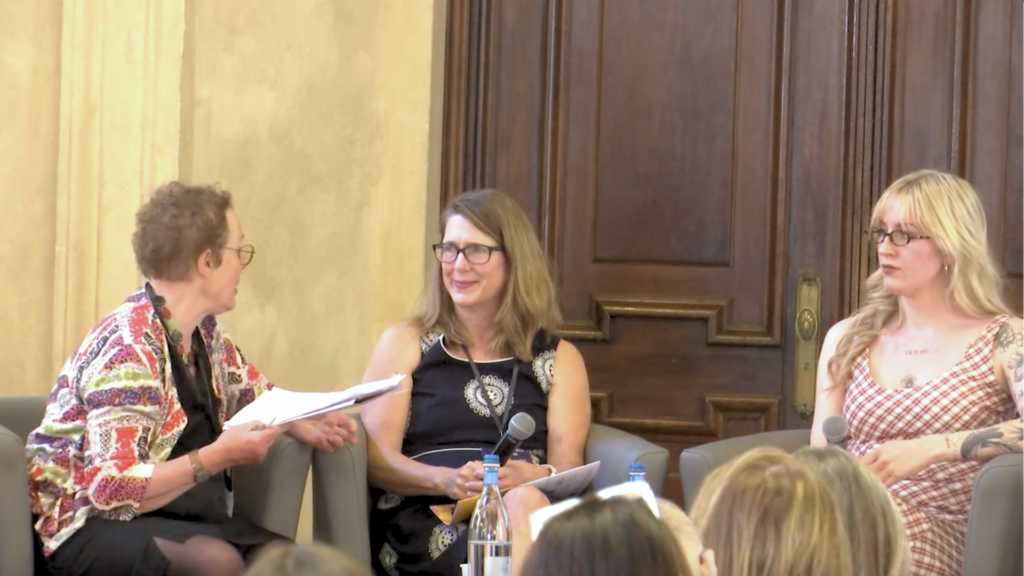
“We need to make sure we continue to listen to the voices of people with direct experience of parental imprisonment and include them in everything we do. […] But this involvement should not be tokenistic — we need to value their contributions, pay them for their work and support them to develop as professionals. I don’t want to be seen only as someone who had a parent in prison and whose expertise comes solely from that experience. I have many other professional experiences and skills that I bring with me. It’s about investing in people and supporting their development, […] to strengthen what they already bring.”
— Evie Mae Stevenson, Member of the Parental Imprisonment Collective
Moderated by Kate Philbrick, this International Panel explored experiences and research on how a parent’s imprisonment impacts children and what can we do structurally and individually to better support them. The session opened with a video from Louise Riondel, Secretary to the Council for Penological Cooperation (PC-CP) of the Council of Europe, who began by highlighting the importance of Council of Europe Recommendation CM/Rec(2018)5 of the Committee of Ministers to member States concerning children with imprisoned parents, and the need to further promote its practical implementation and impact on the ground and to make it readily available to all, including to people in prison and their children. She cited overcrowding issues, prison design and carceral settings incompatible with fostering empathy and providing good conditions for a healthy child-parent relationship. Significantly, she underscored the need to foster compassion and to reduce stigma surrounding imprisonment, which runs deep in society and in the media, impacting prison staff, people in prison, their families, their friends, their children at school and in everyday life.
Evie Mae Stevenson, from the Parental Imprisonment Collective (UK), urged professionals to move beyond stereotypes about children with imprisoned parents. Asked what single change would make the biggest difference for children affected by a parent’s imprisonment, her answer was simple: recognise that every child is different. Too often, she observed, professionals focus on children who struggle visibly—with mental health, behaviour or school achievement. Those experiences are real and important, but they are not universal and were never a part of her story. Growing up in a deprived area, she became a high-achieving perfectionist and took on adult responsibilities at home. She never spoke about her father’s imprisonment until she was 22 years old, after meeting someone whose mother had been imprisoned. “My experience didn’t fit the typical story, and because of that, I didn’t receive support when I needed it. So, for me, the key message is that every child is different.”
Responding, Dr Julie Poehlmann, Professor at the University of Wisconsin–Madison, highlighted that support must begin by listening to people with lived experience. Researchers, she said, have a responsibility to amplify children’s voices, including those of very young children whose experiences must be understood through sensitive observation as well as conversation. Julie has interviewed thousands of people with lived experience. She highlighted a consistent finding from her current international research interviewing young people from England, New Zealand, South Korea, Spain and Uganda who have experienced parental incarceration: supportive relationships are the strongest protective factor. Rather than focusing solely on adversity, the researchers examined both the challenges and pathways to flourishing, emphasising children’s resilience, aspirations and strengths across diverse cultural contexts. Children identified family, friends, schools, specialist organisations and trusted adults as key sources of resilience. Many also stressed the importance of maintaining meaningful contact with their imprisoned parent. See research and its findings here.
Both speakers also challenged deficit-focused narratives. While acknowledging the risks associated with parental imprisonment, Julie emphasised recognising children’s strengths and capacity to flourish alongside their needs.
Support, they both argued, must extend beyond children themselves. Evie stressed that caregivers and prison staff also need support, observing that “you can’t fill up other people’s cups if your own cup is already depleted.” Julie stressed how research shows that compassion is something that happens between people and that there are ways of increasing empathy and compassion and respect. Decarceration is one of them, but she also pointed to programmes that come out of the field of mindfulness that have been shown to increase empathy and improve situations involving stress. She feels these interventions could be explored for people who work in the justice system, for teachers, for parents and children and then evaluated in these contexts.
Asked how services can work together, Evie called for parental imprisonment to be recognised as a public health issue, encouraging coordinated action across health, education and social care rather than leaving responsibility solely within the justice system. Julie added that people with lived experience should be actively involved in designing, delivering and evaluating policies and services, as well as in research.
Finally, both identified reducing stigma as a top priority, as Louise Rionel had done. Julie highlighted public awareness initiatives, including Sesame Street and youth-led filmmaking projects, while Evie stressed that schools and media have a crucial role in normalising conversations about parental imprisonment. Stigma, she concluded, remains one of the greatest barriers preventing children from seeking support, maintaining relationships with their parents and feeling that their experiences are accepted rather than hidden.
III. The Partnership with the Court of Milan: A Best-Practice Example
Moderated by Raffaele Bianchetti, university lecturer and honorary judge at the Milan Juvenile Court, this panel showcased the Convention between Bambinisenzasbarre and the Court of Milan—a pioneering partnership in Italy with strong potential for replication across Europe. Roberta Cossia of the Court of Supervision reaffirmed that parenting is a fundamental right enshrined in the Italian Constitution, while emphasizing the challenge of protecting that right within prison security constraints. Paola Ortolan, President of the Juvenile Court, urged that decisions on child-parent contact always be guided by the child’s best interests and called for the Juvenile Court to become a permanent partner in the Convention cited above.
IV. Theatre as a tool for inclusion
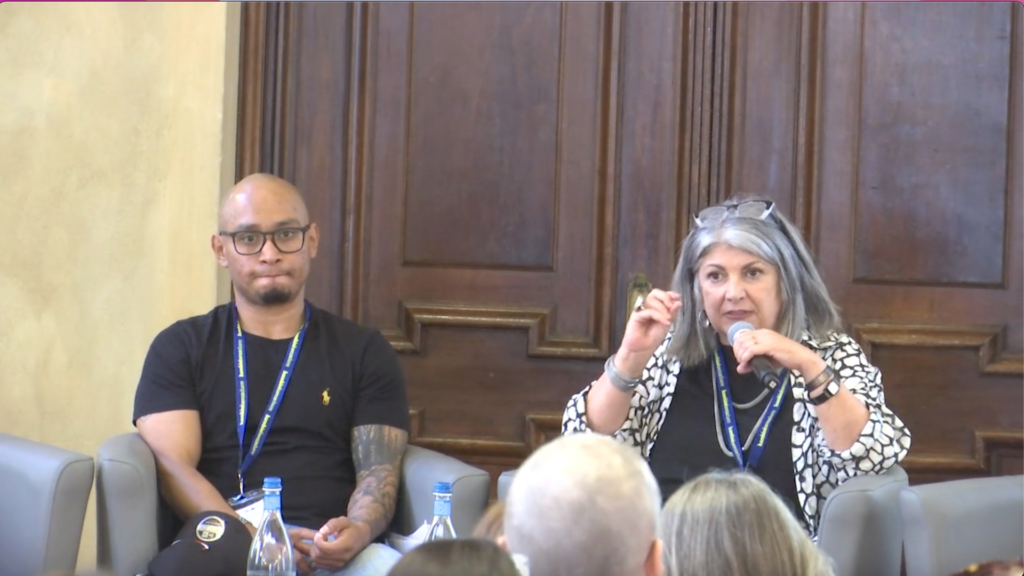
Director and playwright Ivana Trettel, the founder of one of Italy’s best-known prison theatre companies— Opera Liquida—highlighted the role of theatre in promoting rehabilitation through artistic creation. Working with incarcerated and formerly incarcerated people at the Milan Opera Prison, Opera Liquida stages original productions based on the writings, experiences and reflections of the actors themselves, rather than staging existing plays. Its aims include social inclusion, supporting imprisoned parents and challenging stereotypes about prisoners. To illustrate, actor Alex Sanchez shared anonymous writings from students dealing with themes such as family fragility, violence and absent fathers. He also performed a poetic piece from the theatre production “Noi guerra! le meraviglie del nulla” (2021), a collectively written piece examining war, violence and hatred through the perspectives of imprisoned actors, combining theatre with contemporary art and original installations.
V. Interactive Seminars
Strengthening Skills and Awareness in Public Institutions
Council of Europe Committee for Penological Cooperation Vice-President Carla Ciavarella led the first afternoon seminar, an interactive discussion on ways to foster successful collaboration with prison authorities. Participants highlighted the importance of grounding practice in evidence, using the UN Convention on the Rights of the Child and other legal frameworks to establish shared responsibilities, and building trust-based relationships between NGOs and prison staff.
The discussion also addressed sustainability: how to maintain child-friendly prison visit spaces when funding or NGO involvement is limited. Participants agreed that lasting impact requires child-friendly practices to become embedded in everyday prison operations, staff culture and legal obligations, rather than remaining external initiatives. Carla concluded that sustainable reform also depends on stronger collaboration between institutions and civil society, recognising that diverse perspectives lead to better policy.
Theatre Workshops with Children and Imprisoned Parents
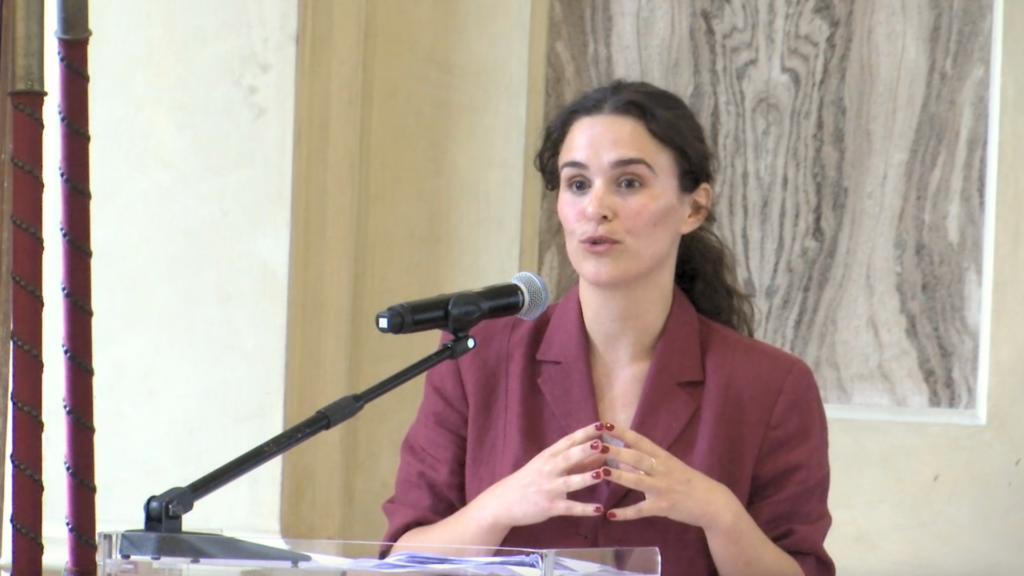
“The beauty of theatre is that it allows you, even if only for a moment, to let go of the structures that define us and to become something else — within a bubble of listening, and closeness.”
— Giulia Marchesi, actress and trainer with Opera Liquida
Led by Giulia Marchesi, actress and trainer with Opera Liquida, the session introduced the project “Our Bubble”. Created in 2016 at Milan Opera Prison and later expanded to Bollate and San Vittore prisons, this monthly theatre workshop brings together imprisoned fathers and their children in a space where their relationship can be nurtured and explored beyond the limitations of traditional prison visits. Unlike traditional visits — which are described as structured, distant and constrained by rules — the workshop creates a safe, informal and emotionally open space where participants can interact as “fathers and children” rather than “imprisoned person and visitor.”
“My Father Is in a Strange Place: The Truths That Can Be Told”
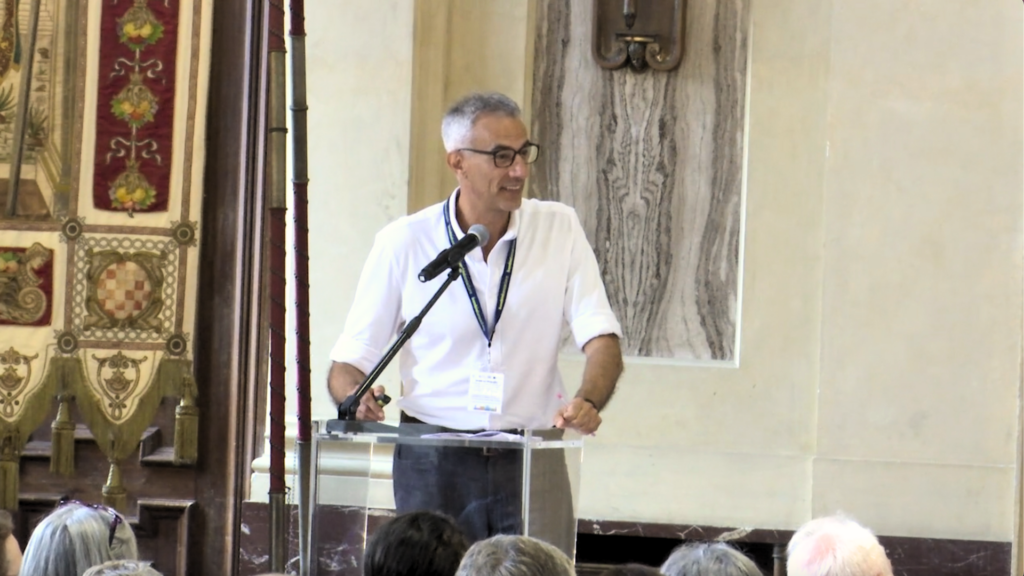
Andrea Prandin, pedagogue and expert in aesthetic languages within care processes, led a beautifully poetic seminar which drew on literature, philosophy and psychological concepts to explore the challenge of explaining imprisonment to children using a truthful and protective narrative. He introduced the idea of a “geography of darkness” — finding ways to approach difficult truths without hiding reality or overwhelming children. He highlighted three important characteristics that a story must have to bring children closer to the truth:
- Celebrating becoming — seeing imprisonment as a passage rather than a permanent identity.
- Addressing loneliness and pain — ensuring children know that they and their parents are supported.
- Celebrating human connection — recognising that every child is unique but never alone, as part of the “human consortium”.
Andrea concluded by emphasising the transformative power of art and poetry in turning experiences of harm into possibilities for hope, highlighting that we are all rivers, finding our way toward the sea.
Concluding Remarks
The Conference demonstrated the importance of moving from isolated interventions towards shared responsibility and learning across all sectors involved in children’s lives. Across institutional, international, artistic and community perspectives, a common message emerged: children affected by parental imprisonment must be recognised as rights-holders — meaning they must be properly represented within change-making processes and their voices must be heard in meaningful ways. Generating system-level change requires dedicated support and continued collaboration between prison administrations, courts, social services, schools, communities and organisations with expertise in this field. It highlighted the progress achieved in Italy and across Europe through decades of work, while examining the remaining challenges and the importance of strengthening cooperation at European level.