

Ensuring that children remain protected, supported and meaningfully connected when a parent is imprisoned requires more than isolated actions by individual institutions. It demands coordinated responses across justice, prison, child protection and social services — all guided by a shared understanding of children’s rights and best interests.
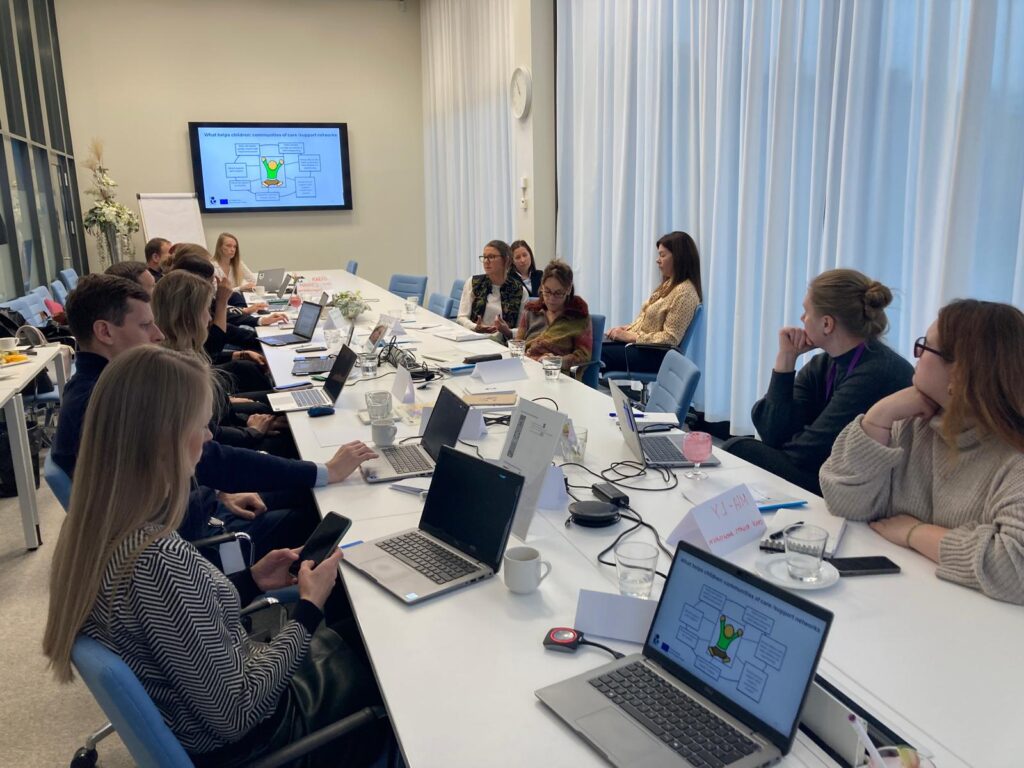
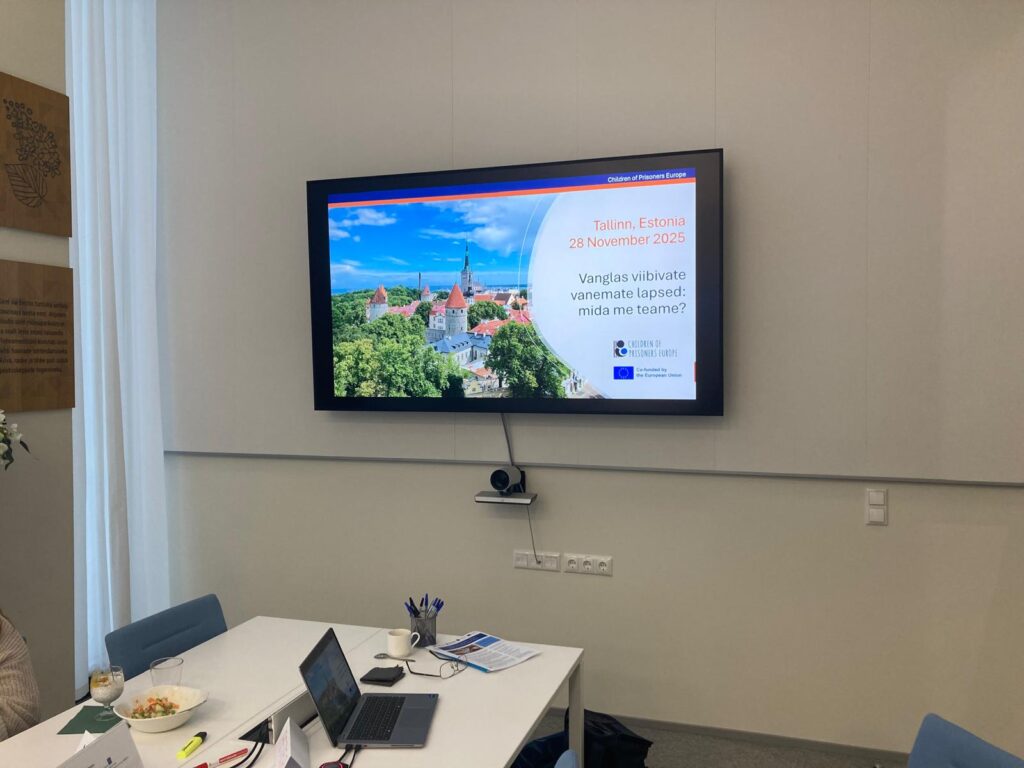
The Estonian One Roof multi-sectoral meeting that took place on 28 November 2025 in Tallinn was built around this principle. COPE’s One Roof concept promotes cross-sector cooperation by bringing together relevant ministries, agencies and bodies impacting children’s lives when a parent is in prison to better coordinate policies, procedures and practices that support children, helping to reduce system gaps. The event, hosted by the Ministry of Justice and Digital Affairs, included the Social Affairs Ministry / Social Insurance Board, representatives from Estonia’s three prisons, the Children’s Ombudsman and the Office of the Chancellor of Justice. A meeting was held the evening before with the head of the Estonian prison service*, Peter Gornischeff**, COPE Board Member Ewelina Startek and COPE’s Executive Director Liz Ayre.
* Mr.Rait Kuuse is currently holding a position of the Deputy Secretary General on Prisons (DG of the Prison Service) in the Estonian Ministry of Justice. His main responsibility is the overall management of the Estonian Prison Service in the implementation of custodial and non-custodial sentences.
** Representative from the Estonian Ministry of Justice
The current state of affairs in Estonia
Existing practices for family connection
Representatives from the Estonian Prison Service highlighted several practices designed to help children maintain meaningful relationships with their incarcerated parents:
Increased opportunities for phone calls, although implementation may vary between units;
– Child-friendly visiting arrangements, including short-term visits without glass partitions and well-equipped visiting rooms with toys and games;
– Innovative practices such as game rooms for long-term visits and development of outdoor family visiting areas;
– Home visits in open prisons, allowing children and parents to spend time together in everyday environments within agreed boundaries.
– Security procedures are adapted for children, with a clear emphasis on avoiding intrusive measures.
– These initiatives reflect growing alignment with international standards that stress the importance of maintaining family ties during detention.
Parenting support: missing pieces
Despite these advances, dedicated parenting programmes are not currently available in Estonian prisons. While motivation and social skills programmes may offer indirect benefits, participants agreed that this is not enough.
Several potential solutions were discussed:
– Adapting established parenting programmes, with consideration of prison-specific constraints;
– Drawing inspiration from family-focused prison models in other countries, where family therapists and structured group work support both parents and children;
– Making parenting materials (including videos) available on prison computers;
– Establishing voluntary parenting cafés or discussion groups, potentially facilitated by family therapists and aligned with existing language café models.
– The message was clear: parenting doesn’t stop at the prison gate, and support shouldn’t either.
The data gap
A recurring challenge echoed across Europe is the lack of reliable data on children affected by parental imprisonment. Prisons primarily rely on population registry data, which identifies legal parenthood but not actual involvement in a child’s life. This gap makes it hard to assess children’s real living conditions and emotional needs and design inclusive social policies and protection systems. Without better data, children risk remaining invisible in systems meant to protect them.
Security procedures: ideas for improvement
Although security procedures are already adapted for children, participants explored ways to further reduce fear and stress during visits.
Ideas included:
– Using less intimidating detection dogs, choosing breeds that provoke less anxiety;
– Avoiding stressful procedures, such as lining visitors against walls during checks;
– Encouraging friendlier staff interactions, with officers explaining procedures calmly and clearly to children;
– Introducing child-friendly safety videos, potentially voiced by children to explain what to expect, similar to airport security videos.
Digital contact and legal challenges
Video calls were widely recognised as an important way for children to stay connected with an imprisoned parent. They allow children to share everyday moments, show parts of their lives and remain present for special occasions such as birthdays or school achievements.
At the same time, participants acknowledged that digital contact is not always positive for every child. For children with experience of maltreatment or trauma, video calls can be emotionally stressful and difficult to manage.
Discussions also highlighted the complex situations that arise when a child’s best interests do not fully align with a parent’s right to maintain contact. Supervised communication can place an additional emotional burden on children, while practical obstacles, such as obtaining digital consent for routine decisions or differing municipal practices around parental custody during imprisonment, can create uncertainty and inconsistency.
Child protection authorities stressed that in all cases, decisions should be guided first and foremost by the child’s right to safety, dignity and emotional security, rather than by parental rights alone.
Latest developments
On 18 June 2025, the Ministers of Justice of Estonia and Sweden formalised a prison lease agreement between the two countries. If both national parliaments ratify this agreement, the first group of foreign prisoners is expected to be transferred to Estonia in the second half of 2026. Reportedly, these prisoners are more likely to be of nationalities other than Swedish but currently serving sentences in Sweden, with typical transferred prisoners expected to be adult males serving longer sentences, usually for offenses against the person or drug-related crimes.
Beyond the many challenges posed by the prison lease itself, the impact on the families of prisoners sent to Estonia—particularly their children—cannot be overlooked. Transferring a child’s parent or other close relative from Sweden to serve a prison sentence in Estonia can pose practical and emotional difficulties for the child and feel as if the person has been taken away entirely.
The Chancellor of Justice’s most recent inspection of Tallinn Prison highlighted serious challenges that the few foreign prisoners currently serving sentences in Estonia already face: limited access to information, support and reintegration programs due to language barriers; difficulties accessing healthcare; and expensive international phone calls. Notably, video calls were not provided, and contact with family members abroad was extremely limited.
Looking ahead
The meeting underscored that while broader societal support remains essential, meaningful improvements can already be achieved by paying closer attention to how children experience contact with the prison system and by consistently embedding a child-centred approach into everyday prison practices.
Building on this shared understanding, the Ministry of Justice and Digital Affairs will organise a follow-up meeting in 2026, with the aim of developing cross-sectoral training for prison staff and social services professionals focused on the rights and needs of children with a parent in prison.