

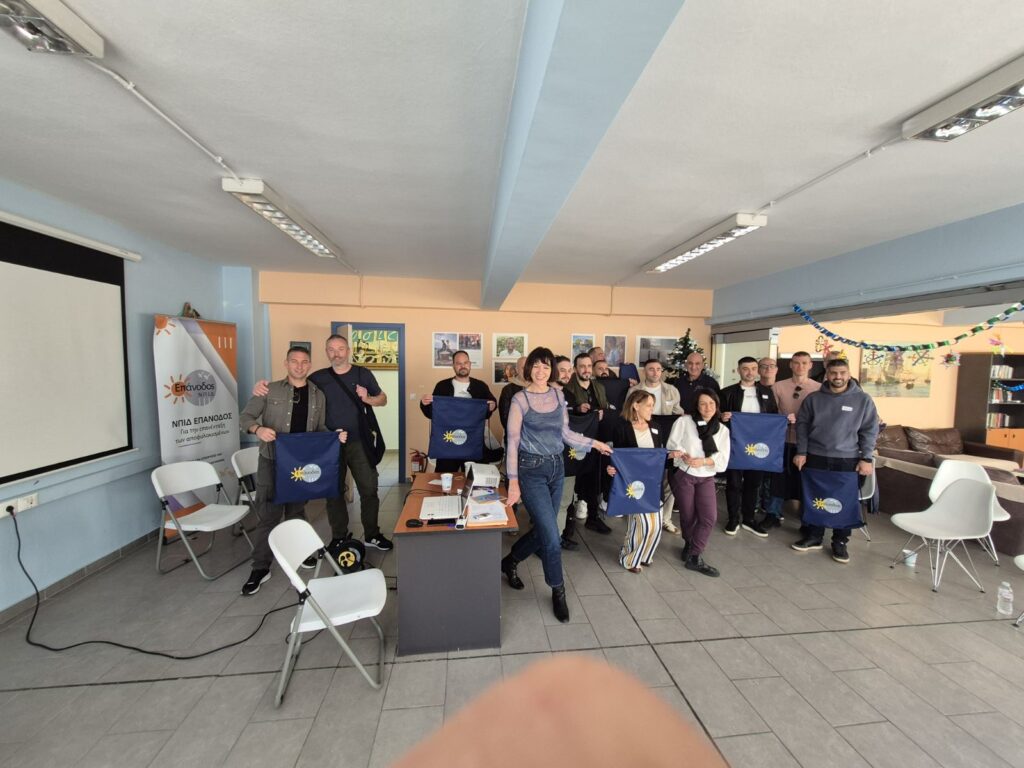
Athens & Thessaloniki, December 2025 — In a powerful step toward more child-sensitive prison practice, two closely linked interactive workshops brought prison officers from across Greece together this December to focus on the rights and well-being of children visiting a parent in prison and to reflect on their own experiences.
Organised by COPE in partnership with the General Secretary for Anticrime Policy and EPANODOS, the workshops were facilitated by COPE member Christine Maerkl, a psychologist at Korydallos Prison, and by psychotherapist and reintegration counsellor Dimitra Theodorakopoulou of EPANODOS. Delivered on 10 December in Athens and on 12 December in Thessaloniki, the workshops created a shared learning space for 36 prison officers from 12 prisons nationwide. Holding the sessions in both the capital and northern Greece helped ensure broader participation and a rich exchange of perspectives from different prison contexts.
The workshops explored children’s rights, needs and experiences, while highlighting how prison officers can act as “people of trust”, providing reassurance and guidance during visits — without compromising security, order or professional responsibilities. Prison officers shared candid reflections on their own experiences, including the challenges of supporting distressed children while maintaining security and how some staff interactions can unintentionally contribute to children’s trauma. Practical exercises and discussions translated theory into action, highlighting the importance of calm communication, clear explanations of procedures, listening to children and validating emotions, and the availability of more child-sensitive visiting spaces.
A central theme throughout was the importance of prison officers’ support for parents in custody, recognising that strengthening the parent can also protect the child. Parents’ perspectives were also discussed, with emphasis on the emotional strain of imprisonment, loss of autonomy, and the risk of role reversal, where children become emotional supporters. Discussions highlighted how structured visits and supported family interactions strengthened child-parent bonds. Sessions also examined reintegration, with EPANODOS sharing insights from its Family Office pilot at Eleonas Women’s Prison, demonstrating how careful preparation can support smoother reunification and preserve relationships.
Discussions during both workshops were candid and reflective, with officers sharing concrete professional experiences, examining ethical tensions, and addressing the emotional demands of their work. The interactive format encouraged dialogue rather than lectures, helping participants connect theory with daily prison practice.
Outcomes included:
- Heightened awareness of children’s rights within prison systems and everyday routines and the importance of listening to children.
- Greater understanding among officers of children’s emotional issues and vulnerabilities when visiting a parent in prison.
- Requests for regular opportunities allowing for honest reflection on professional dilemmas and emotional burdens.
- Practical, trauma-informed approaches were identified that could be applied immediately.
- A better understanding of the vital link between child-sensitive practices, family bonds and successful reintegration.
In sum, the workshops helped humanise the prison setting while providing participants with practical strategies for embedding a more child-centred approach in prison practice. Three prison chiefs committed to creating child-sensitive visiting areas. Officers emphasised the value of peer exchange and further training, emphasising that supporting children effectively also requires supporting staff. COPE and EPANODOS are building on insights gained to enhance future training, guidelines and e-learning tools, ensuring that the lessons from Greece continue to shape practice across Europe.