
The Challenge of Stigma is a new initiative led by COPE, exploring how stigma affects children who have a parent in prison and how creative activities can help challenge it. Through three art-based projects piloted by COPE members in France, Spain and Poland, children will have opportunities to express themselves, share their experiences and connect with their parents through drawing, movement, weaving and music. The project brings together NGOs, justice professionals and the media to encourage greater understanding of children’s experiences and help change the way they are seen and treated.
Why this project
Having a parent in prison can expose children to experiences of shame, isolation and discrimination from an early age. For the estimated 2.1 million children in Europe affected by a parent’s imprisonment, stigma can make children feel that they have something to be ashamed of or that their experiences are not seen or understood. It can affect their sense of self-worth, relationships with others and feeling of belonging.
Much of this stigma is created by society and reinforced by silence and stereotypes. Children can also encounter it when they visit their parent in prison. Searches, surveillance, restricted physical contact, staff uniforms and intimidating environments can make children feel uncomfortable or as if they themselves have done something wrong.
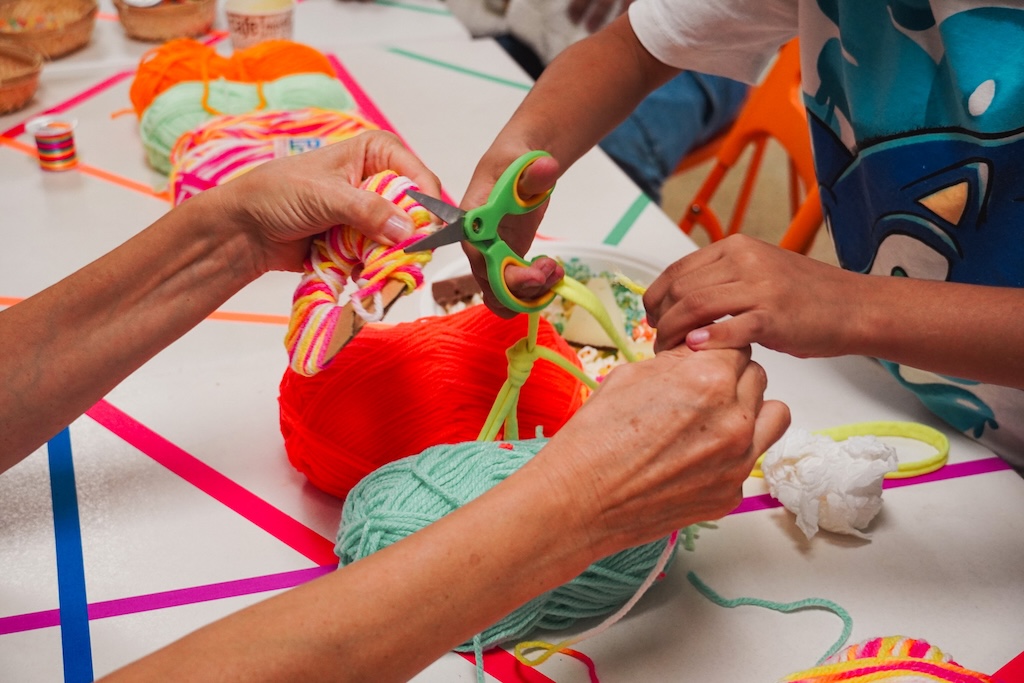
Art and creativity can create a different kind of space within a prison setting, a gentle bridge into and out of what can be an emotionally difficult experience. It offers children a moment of normality — an experience centred on imagination, play and childhood, rather than prison and criminal justice. It also gives them the chance to experience choice, competence and pleasure in a setting where so many things are normally decided for them.
The impact can also go beyond children’s experiences. Their stories can help others understand what it is like to have a parent in prison and challenge assumptions about who these children are. By involving prison staff and other criminal justice professionals, stereotypes about parental imprisonment can be challenged and more empathetic interactions within prison settings encouraged. Over time, this can contribute to creating more child-friendly environments and reducing the stigma children may experience during prison visits.
Helping to dismantle stigma through art
Three pilot initiatives in France, Spain and Poland explore different creative ways for children and their parents to connect and help dismantle stigma. The Challenge of Stigma project will culminate in an exhibition and a guide, bringing together photographs documenting the experiences, as well as drawings and other artworks.
I. Poland — Inside Out: Expressing the Unspoken
On 20 August, the Polish team brought Inside Out: Expressing the Unspoken to a family visit, using art and creativity to give children and their fathers different ways to connect during their time together in prison.
The day started with creative workshops, where children could experiment with colours and materials and explore ways to express their complex feelings, while fathers took time to reflect and write personal letters to their children beginning with the words, “I’d like to tell you…”. For both children and parents, the activities offered another way to communicate in a context where finding the right words can sometimes be difficult.
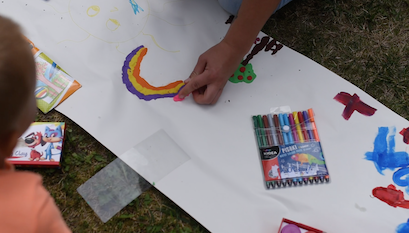
Then came group singing — a simple activity, but one that helped people interact and feel more at ease. And finally, The Blank Page: a huge roll of paper spread across the floor, where children and their fathers could draw side by side, sharing their hopes and dreams and imagining the future.
For a few hours, the focus shifted away from prison routines and restrictions and transformed an ordinary prison space into a shared space of dignity, creativity and connection.
A heartfelt thank you to the prison authorities and staff, whose openness and collaboration made it possible to create this space for children and their fathers to spend time together in a different way.
II. Spain — Weaving Connections
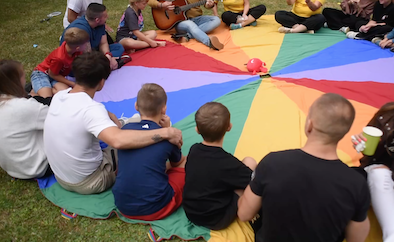
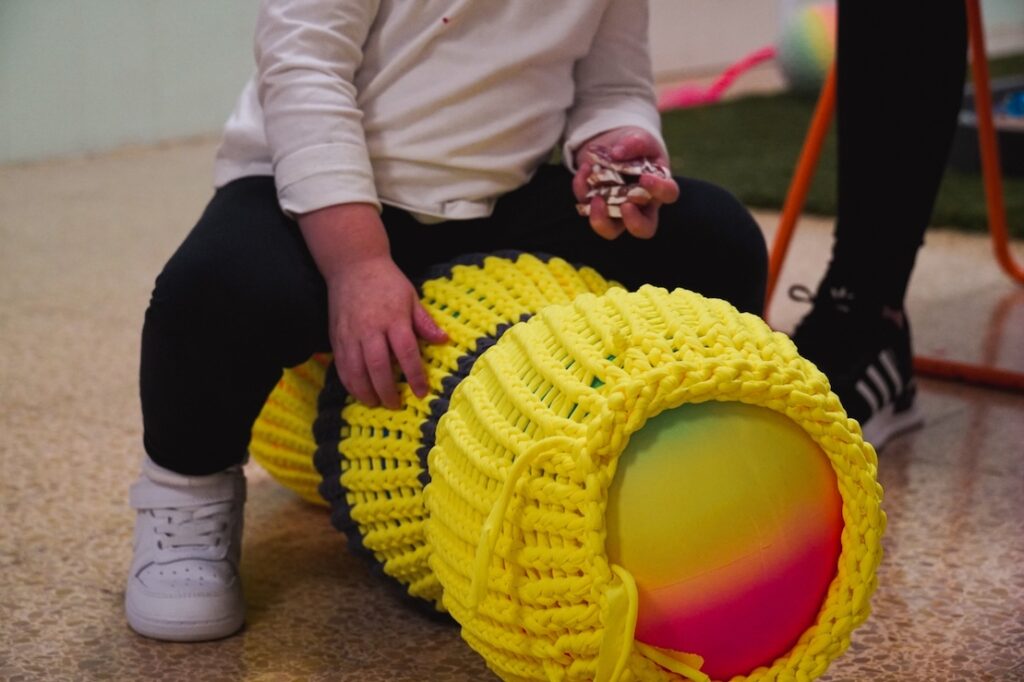
In Spain, Weaving Connections uses textile arts, music and play to strengthen the bond between children and their mothers and fathers in prison. Weaving becomes a metaphor for connection: each thread represents a story, a memory or a step towards one another. Together, children and their parents create woven pieces using bright, symbolic colours to express shared hopes and memories.
On 3 July, children and their imprisoned mothers came together at Barcelona Women’s Prison — Mother and Baby Unit for a creative session, weaving side by side and sharing time through art and play.
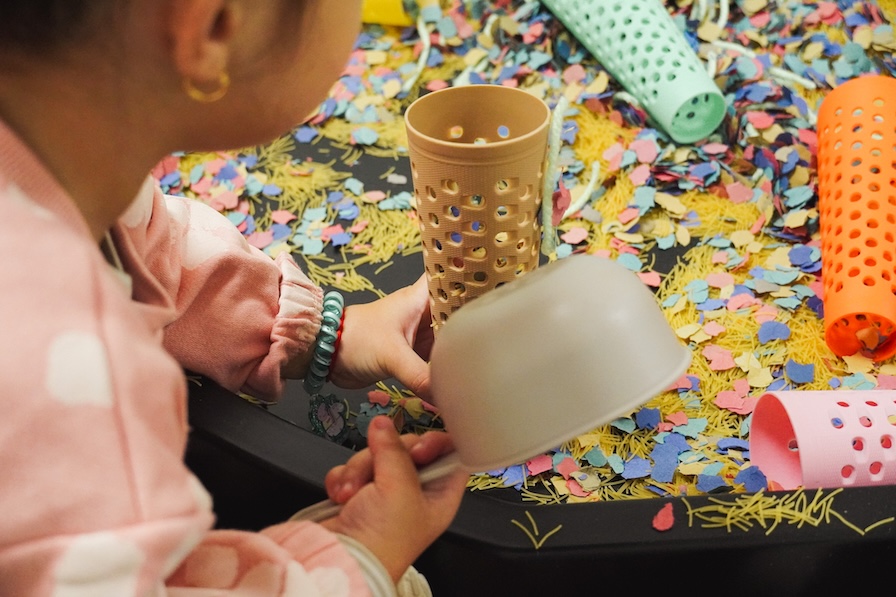
The project also includes tactile play areas with soft woven sculptures, creating welcoming spaces where even the youngest children can explore and play with their parents. Professionals take part in co-weaving sessions too, creating opportunities for people with different experiences and roles to work alongside families and develop a deeper understanding of life behind prison walls.
III. France — Draw Me a Connection
In France, Draw Me a Connection creates a safe, welcoming space where children can pause, create and express themselves through art. The workshops are designed around what children affected by parental imprisonment need most: emotional safety, choice, predictability, positive interaction and meaningful connection. Children are free to decide what they make and whether they want to participate.
Every child experiences parental imprisonment differently. For one child, drawing might be a way to explore something they find difficult to put into words. For another, it might simply be an enjoyable activity, with little connection to their family situation. The workshops offer children space to express themselves as they wish, without expecting them to talk about their parent, their family or their feelings.
The creative journey can be a way of connecting with their parent. A painting, a card or other creation can be shared, giving parents in prison an opportunity to take part in their child’s experience and strengthen their role as a parent from behind prison walls.
As part of the project, participating children will receive tickets to a concert at the Paris Philharmonie, allowing them to engage in cultural life, opening the doors to new experiences and reminding children that they are not defined by their parent’s imprisonment.
More information on this event coming soon.